New research confirms efficacy of Nifurtimox for adult patients with chronic Chagas Disease
The treatment for adults with Chagas Disease works. Let's scale up the access to comprhensive treatment.
04/11/2021

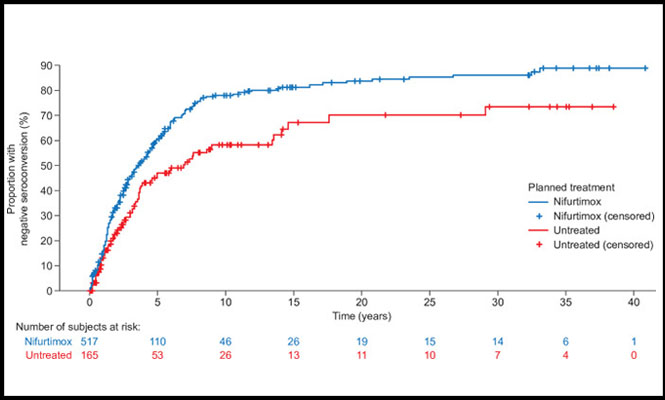
We manually reviewed long-term follow-up data from hospital records of patients with chronic Chagas disease in Argentina diagnosed during 1967-1980. All patients were aged ≥18 years at diagnosis and were either treated with nifurtimox or received no antitrypanosomal treatment.
The primary endpoint was negative seroconversion (the “event”), defined as a change from positive to negative in the serological or parasitological laboratory test used at diagnosis. Time to event was from baseline visit to date of endpoint event or censoring.
The effectiveness of nifurtimox versus no treatment was estimated with Cox proportional hazard regression using propensity scores with overlap weights to calculate the hazard ratio and 95% confidence interval.
The nifurtimox group was younger than the untreated group, with proportionally fewer females, and proportionally more of the nifurtimox group than the untreated group had clinical signs and symptoms of Chagas disease at diagnosis.
Median maximum daily dose of nifurtimox was 8.0 mg/kg/day and median treatment duration was 44 days. Median time to event was 2.1 years for nifurtimox-treated and 2.4 years for untreated patients. Accounting for potential confounders, the estimated hazard ratio (95% confidence interval) for negative seroconversion was 2.22 favoring nifurtimox.
Variable treatment regimens and follow-up duration, and an uncommonly high rate of spontaneous negative seroconversion, complicate interpretation of this epidemiological study, but with the longest follow-up and largest cohort analyzed to date it lends weight to the benefit of nifurtimox in adults with chronic Chagas disease.
SHARE
Other news