The cardiology community strengthens its commitment to tackling Chagas disease
At the 2026 World Congress of Cardiology, representatives of scientific societies, health authorities, and Chagas disease specialists agreed on concrete priorities to strengthen the global response to the disease
28/10/2026
The heart is one of the organs most severely affected by Chagas disease when infection is not diagnosed and treated in a timely manner. An estimated 20% to 30% of people with chronic infection develop clinical manifestations, predominantly cardiac, which may be severe. This underscores the importance of better coordination between primary healthcare and cardiology services, both to facilitate diagnosis and follow-up and to help prevent the progression of complications.
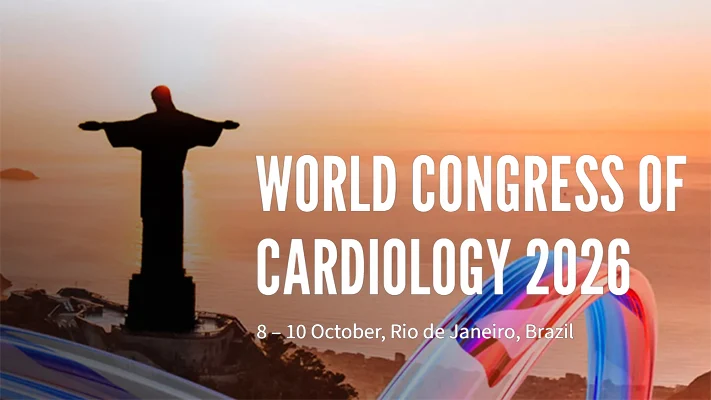
With this goal in mind, the member organizations of the Chagas Global Coalition have decided to strengthen their collaboration with the cardiology community to promote a comprehensive response to the disease. In this context, the Coalition participated for the first time in the World Congress of Cardiology, held on 8–10 October 2026 in Rio de Janeiro alongside the congress of the Brazilian Society of Cardiology.
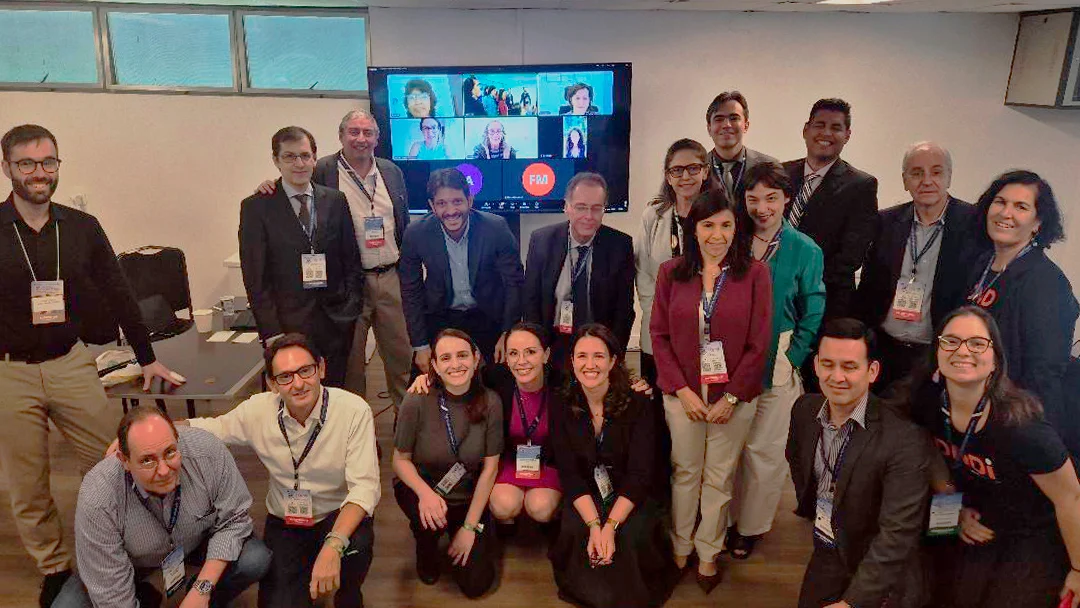
A working session co-organized with our partners at the World Heart Federation (WHF) and Salvando Latidos explored the concrete, feasible, and measurable contributions that the cardiology community can make to tackling Chagas disease. Participants identified two priorities:
- Case registration and reporting in the countries most affected by Chagas disease.
- Training and knowledge exchange between cardiology and primary healthcare professionals.
Prevention and reporting. Participants agreed to develop proposals with measurable objectives in both areas, aiming to improve coordinated care and the collection of clinical and scientific evidence.
The session was introduced by Daniel Piñeiro, former president of the World Heart Federation (WHF), and opened by Francisco Edilson Ferreira, Director of the Department of Communicable Diseases at Brazil’s Ministry of Health. Representatives of health authorities, cardiology societies, and specialized organizations took part, including the regional office and Chagas disease programme of DNDi, Fiocruz, the Spanish initiative SECoopera of the Spanish Society of Cardiology, ISGlobal, the US-based organization LASOCHA, and Bolivia’s SANIT Foundation. Cardiology specialists from Novartis and representatives of the Casa de Chagas association in Pernambuco also participated. The work and inputs of Dr. Tom Ribeiro, from Universidade Federal de Minas Gerais, were key for the discussion, that was also supported by the INTERTRYP research unit of the French National Research Institute for Sustainable Development (IRD).
Participants also agreed to advance a strategic collaboration with the Inter-American Society of Cardiology (SIAC), represented by Dr Luisa Aguilera and its president, Ricardo López Santi. SIAC brings together national cardiology societies across the Americas. Initial efforts are already under way to better understand the scale of Chagas-related cardiac complications in the region. This work will be coordinated with the Chagas Global Coalition’s cardiology working group.
The interest shown in Chagas disease sessions and discussions during the congress highlighted an opportunity to give the disease greater visibility in cardiology training and professional exchanges, thereby improving awareness and care.
The Chagas Global Coalition thanks representatives of Brazil’s Ministry of Health and specialists from Fiocruz for their contributions; the WHF for its support, particularly Professor Tom Ribeiro, Sean Taylor, and Yunshu Wang; and Salvando Latidos and SIAC for their participation, including cardiologists Luisa Aguilera and Luis Eduardo Echeverría. The Coalition also acknowledges the collaboration of DNDi’s communications team and its regional director, Sergio Sosa-Estani, as well as the support provided by INTERTRYP and IRD.
SHARE
Other news