Data from three decades reaffirm the high efficacy of the treatment against Chagas disease
New study demonstrates that early treatment of Chagas disease with Benznidazole achieves sustained parasite clearance and serological clearance

28/10/2026
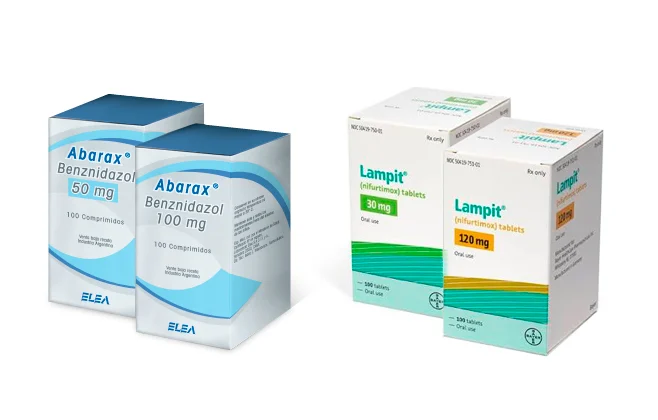
A team led by experts from the Ricardo Gutiérrez Children’s Hospital and CONICET (Argentina) has published the results of a study on the capacity of Benznidazole to treat Chagas disease. At the end of the treatment, 100% of the patients cleared parasitemia—that is, no trace of Trypanosoma cruzi remained in their blood.
The most revealing finding, however, relates to the evaluation of antibodies. One year after treatment follow-up, 38.8% of patients already showed a reduction of over 20% in their antibody titers against the parasite. Even more notably, nearly a third of the cohort (29.8%) achieved complete seronegativity in the early stages of follow-up.
This research is remarkable due to the amplitude of the sample used. The authors analyzed the medical records of a cohort treated at a center in Argentina between 1980 and 2019. After applying rigorous selection criteria, they included 464 patients: 411 children and adolescents, and 53 adults.
The study conclusively demonstrates a crucial factor: age is a determining factor. The rate of seronegativization was significantly faster in infants and young children compared to adults. The younger the age at treatment initiation, the faster the immune system “forgets” the parasite, closing the cycle of the disease before it can cause irreversible damage to the heart or digestive system. Furthermore, the researchers documented absolute clinical improvement in the small group of patients (11 children and 1 adult) who presented symptoms at diagnosis—such as liver inflammation or nervous system complications—with their clinical condition resolving following drug administration.
The results also sheds light on the optimization of dosing strategies, a crucial topic in current cardiology and infectiology. While children received the standard dose for approximately 60 days, adults received treatment for a median of just 31 days. Even with this reduced exposure time, the drug achieved parasite clearance. This finding is vital, as it supports recent scientific trends suggesting that shorter treatment courses in adults maintain antiparasitic efficacy while drastically reducing adverse side effects.
A paradigm shift with global impact
By providing robust, long-term retrospective evidence, the study reaffirms the guidelines of the Pan American Health Organization (PAHO) and the World Health Organization (WHO), which urge active diagnosis and treatment of Chagas disease—especially in its pediatric stage and in women of childbearing age—to prevent congenital transmission.
Assessing whether a chronic Chagas patient is truly cured has traditionally posed a clinical challenge. Thanks to three decades of meticulous data collection, this study now points to long-term Benznidazole treatment not only eliminating the causative agent of the disease, Trypanosoma cruzi, but also opening the door to a disease-free future for affected individuals when administered in a timely manner.
It is estimated that currently less than 1% of affected people receive antiparasitic treatment. Therefore, these encouraging results represent an opportunity and a driving force to foster new strategies for public health systems to address the existing gap and guarantee access to diagnosis and treatment for all people affected by this Neglected Tropical Disease.
You can access the published study in Antimicrobial Agents and Chemotherapy (AAC): “Effectiveness of benznidazole in the treatment of Chagas disease in children and adults: a long-term retrospective cohort study“
Photo by: Bevan Goldswain
SHARE
Other news