

Identifying the ecological associations of triatomines that shape Trypanosoma cruzi transmission cycles using a metabarcoding approach
IRD (French National Research Institute for Sustainable Development)
The project is conducted across various regions in Latin America, mainly in Mexico, but not only.
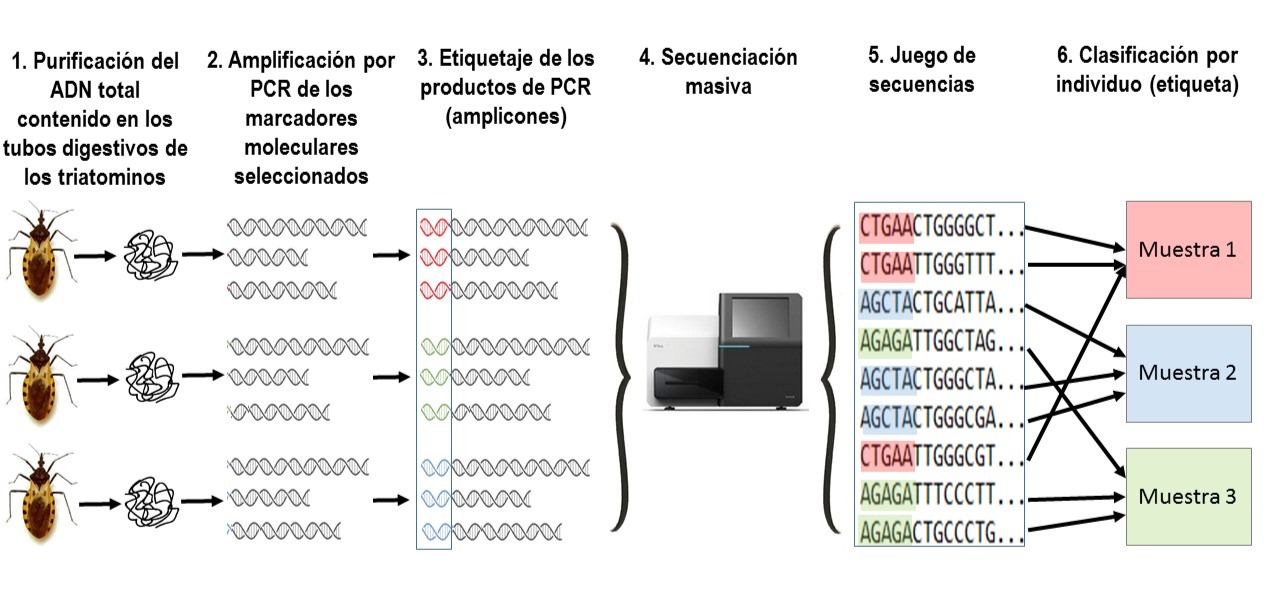
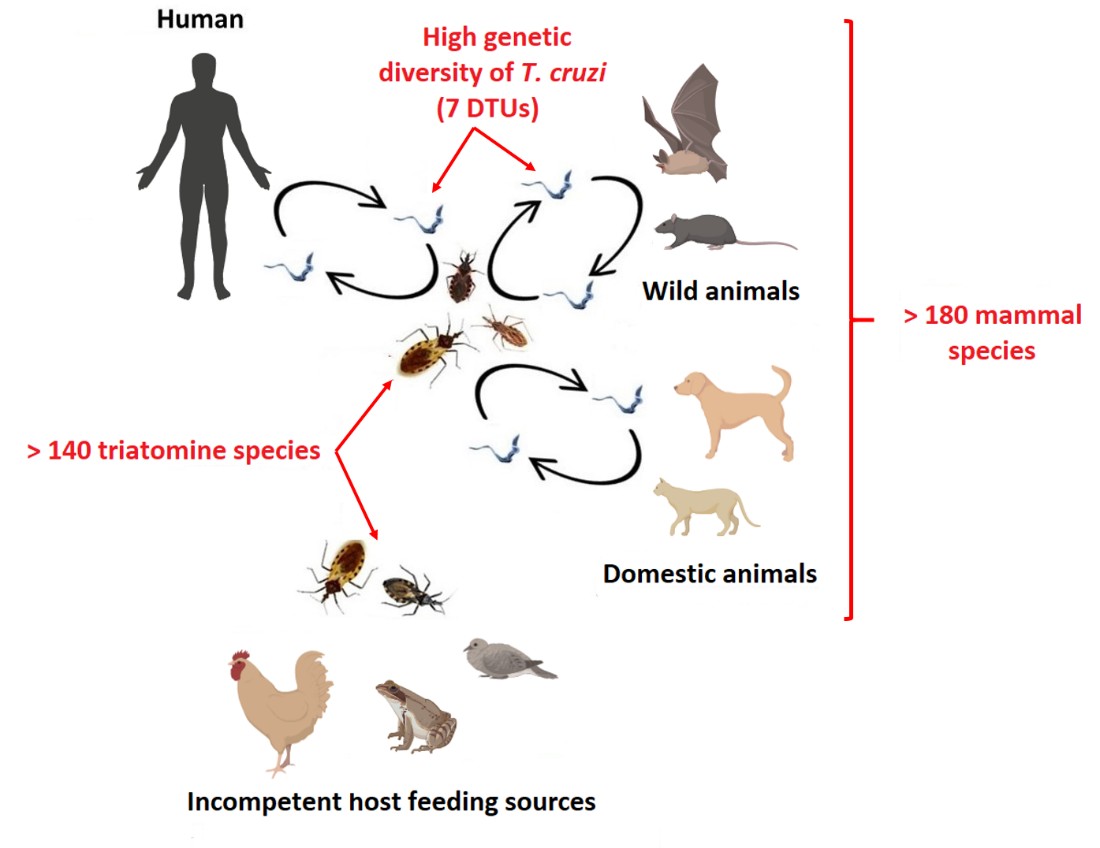
This project aims to comprehensively characterize the ecological interactions of Chagas disease vectors that shape Trypanosoma cruzi transmission cycles. Using a metabarcoding approach, it enables the simultaneous identification of triatomine species, their genetic diversity, blood meal sources, midgut microbiome composition, and the genetic diversity of T. cruzi in infected vectors. All these components interact and influence the dynamics of T. cruzi transmission.
By integrating these data into dynamic transmission models, the project seeks to identify the conditions that minimize T. cruzi transmission to humans. The approach is applied across various regions and triatomine species, including—among others—Triatoma dimidiata, Dipetalogaster maxima, Triatoma sinaloensis, Triatoma rubida, Triatoma protracta, Triatoma recurva, and Triatoma infestans.
PARTNERS
- Intertryp Research Unit (IRD)
- Parasitology Lab (CIR-UADY)
- Universidad Veracruzana
- Universidad de Sonora
- University of Baja California
SHARE
Related projects

