Historic Resolution: Addressing Chagas Disease and Neglected Tropical Diseases Is a Human Rights Issue
From today, access to Chagas disease care is officially recognized as a human right
08/07/2026
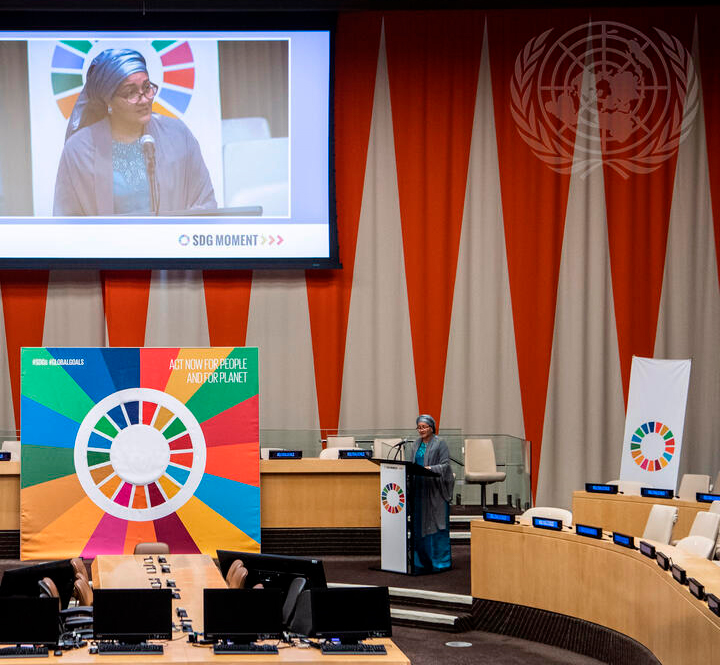
On 7 July, the United Nations Human Rights Council adopted a landmark resolution recognizing Neglected Tropical Diseases (NTDs) as a human rights issue. This historic decision has the potential to usher in a new era for Chagas disease, alongside the other neglected tropical diseases.
For the first time, the international community has formally acknowledged that these diseases are not only a public health challenge, but also a matter of human rights, equity, and social justice. The resolution was introduced by Malawi, together with a group of African countries, and supported by dozens of civil society organizations and public and private institutions, including the Chagas Global Coalition alongside other partners of Uniting to Combat NTDs.
For Chagas disease, this decision represents a historic opportunity. While important progress has been made in vector control, access to existing treatments, and the development of new tools, people affected by Chagas disease continue to face significant barriers to receiving comprehensive care.
The new resolution strengthens the responsibility and commitment of States to guarantee these rights without discrimination and to integrate Chagas disease, together with other NTDs, into their public health policies.
From a public health issue to a human rights framework
For decades, Chagas disease has been addressed primarily through a biomedical lens, focusing on vector control, diagnosis, treatment, and research. However, those working in the field know that Trypanosoma cruzi is only part of the problem.
The resolution explicitly recognizes that the social conditions in which people live are fundamental determinants of neglected tropical diseases and that, in turn, these diseases perpetuate poverty, social exclusion, and human rights violations.
This perspective reflects the reality of Chagas disease, which is perhaps one of the clearest examples of the close interaction between social determinants and disease.
International recognition of a long-standing call for justice
For years, patient organizations, civil society, researchers, and institutions such as the Global Chagas Coalition have advocated for the recognition that Chagas disease is not merely an infectious disease, but also a disease of inequality.
This new resolution provides institutional recognition of that vision. It affirms that people affected by Chagas disease have the right to:
- Timely diagnosis;
- Treatment without discrimination;
- Access to quality healthcare services;
- Live free from disease-related stigma;
- Receive accurate and accessible information;
- Benefit from public policies based on equity.
These principles reinforce the argument that access to diagnosis and treatment should no longer depend on where a person is born or lives.
A major opportunity for non-endemic countries
The significance of this resolution is particularly important for countries where Chagas disease has historically remained largely invisible.
Migration has transformed Chagas disease into a global health issue, with affected populations now living across the world, particularly in North America and Europe. Nevertheless, many people continue to face barriers to diagnosis due to limited awareness among healthcare professionals, the absence of screening programmes, or administrative obstacles that restrict access to healthcare.
A human rights-based approach shifts the discussion beyond epidemiology and places the focus on the obligation of States to guarantee the right to health without discrimination, regardless of a person’s country of origin or migration status.
What comes next
One of the next key milestones will be the preparation of a report by the Office of the United Nations High Commissioner for Human Rights (OHCHR), which will provide recommendations on integrating a human rights-based approach into national and international policies on neglected tropical diseases.
This resolution is the result of decades of work by people affected by Chagas disease, patient organizations, civil society, researchers, and the scientific community.
For Chagas disease, the message is unequivocal: Ensuring equitable access to diagnosis, treatment, and a life free from stigma is not only a public health priority—it is also a human rights obligation.
More information is available on the Uniting to Combat NTDs website. Read the Official Resolution “Human rights and neglected tropical diseases” on the Human Rights Council’s website.
Photo source: United Nations.
SHARE
Other news